Welcome to
Whispers in Focus
Photography, books, and meaningful creations from the heart of Tasmania
Tasmanian landscapes
✳︎
Quiet moments captured
✳︎
Stories from the Central Highlands
✳︎
Photography from the heart of Tasmania
✳︎
Art inspired by land and light
✳︎
Made slowly. Created with purpose
Tasmanian landscapes ✳︎ Quiet moments captured ✳︎ Stories from the Central Highlands ✳︎ Photography from the heart of Tasmania ✳︎ Art inspired by land and light ✳︎ Made slowly. Created with purpose
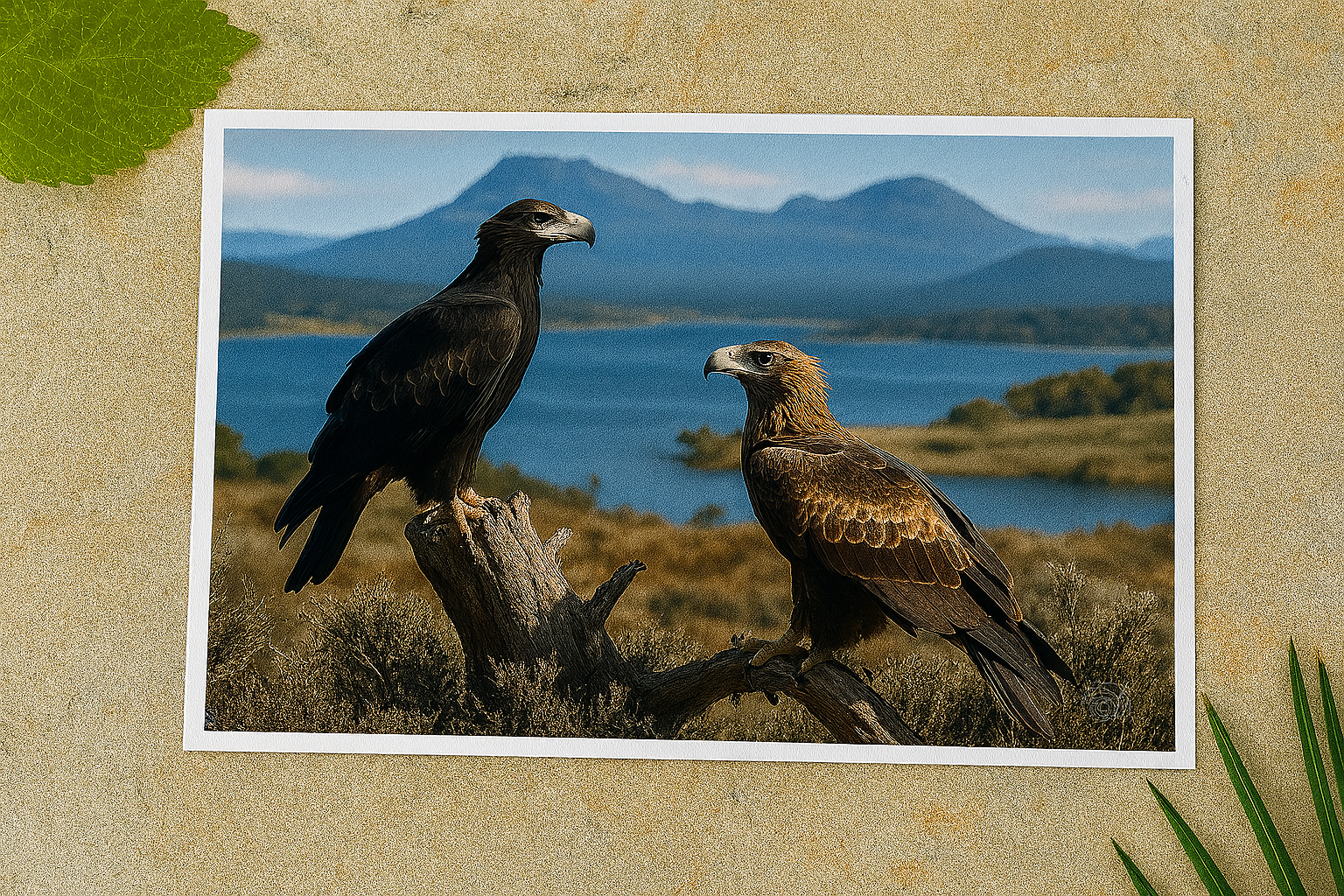
Quiet moments have a way of staying with us.Whispers in Focus is a creative space where Tasmania’s untamed beauty is captured, felt, and shared. From frost kissed highland mornings to shifting skies and fleeting wildlife encounters, every photograph, book, and product begins with a moment of stillness and intention.
Created by a local Tasmanian artist and storyteller, this collection is an invitation to slow down, reconnect with nature, and bring a piece of this remarkable place into your everyday life.
2025
Australia
Rooted in Place. Created with Purpose
Every piece you’ll find here is inspired by Tasmania’s Central Highlands and beyond. The landscapes, weather, wildlife, and quiet stories that shape this land shape every image and word I create.
Nothing here is mass produced or rushed. Each product is thoughtfully crafted to honour the place it comes from and the feeling it leaves behind.
This is art made to be lived with, gifted, and returned to again and again.

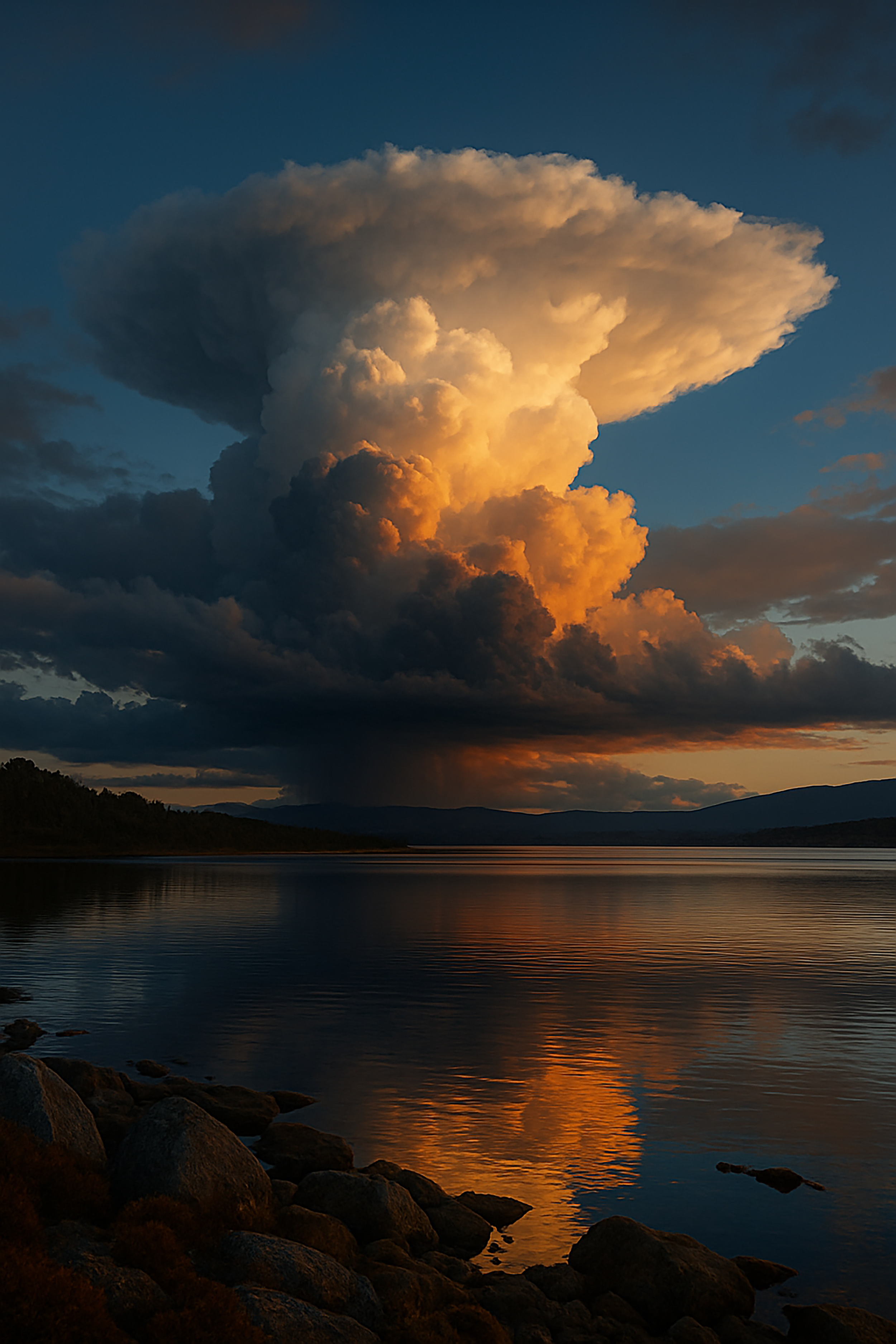
Photography
Photography
Explore the
New
Collection
Discover the latest additions to our collection—handpicked pieces that bring new energy to your space.
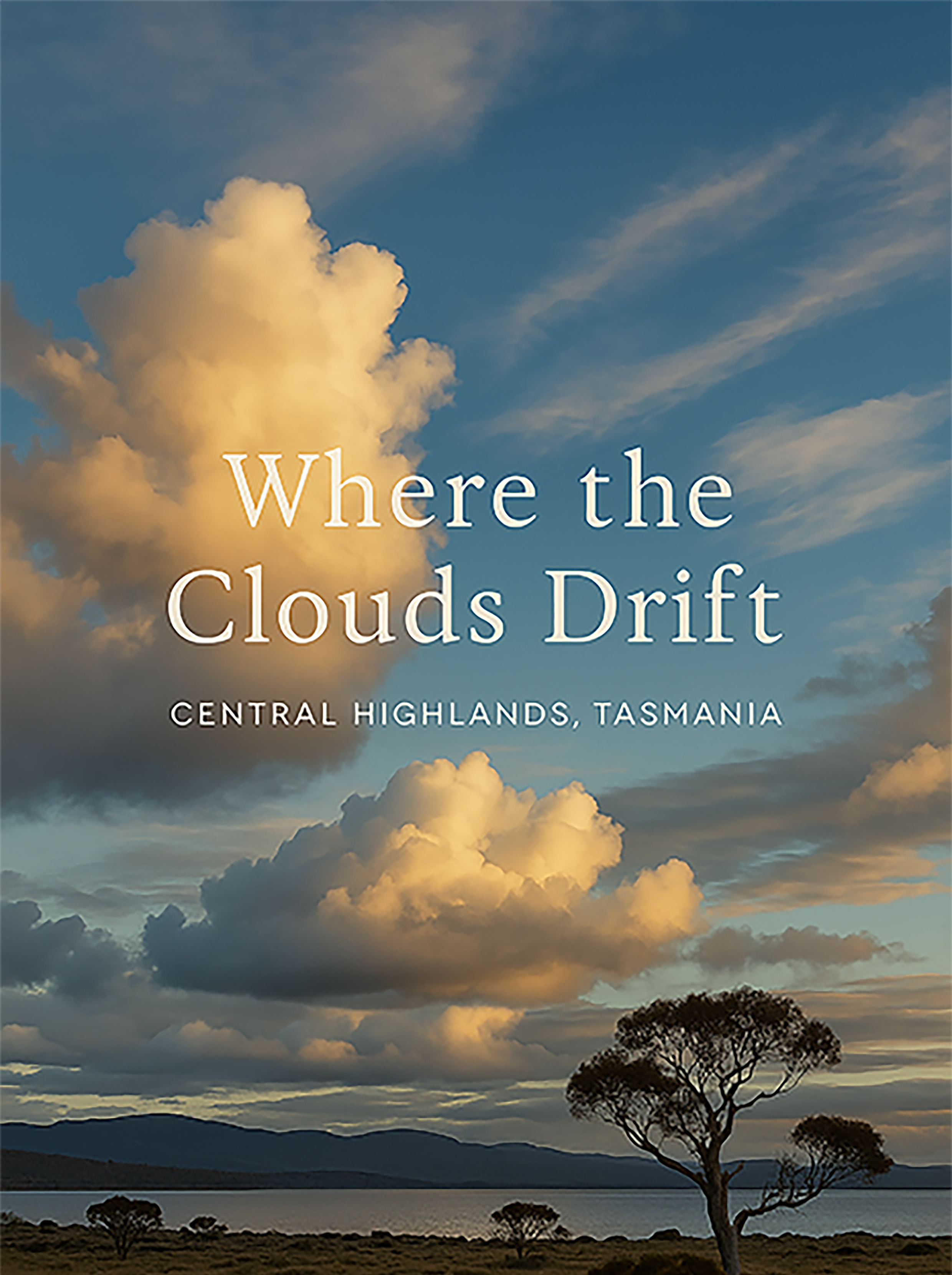
Books

Locally Made Products
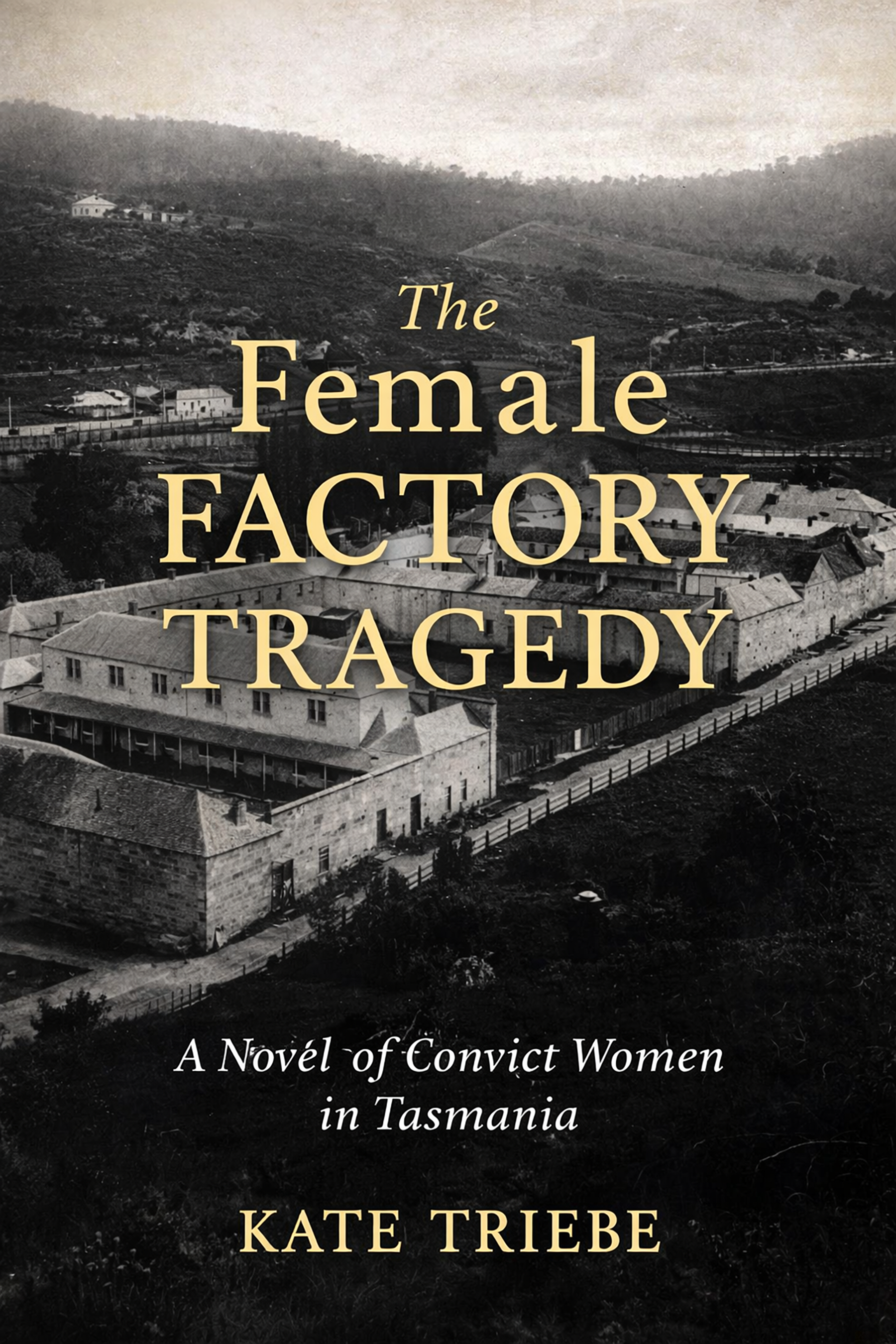
The Female Factory Tragedy is a work of historical fiction grounded in documented events from colonial Tasmania, set primarily within the walls of the Cascades Female Factory in the 1830s and 1840s.
In Van Diemen’s Land, female convicts were confined to institutions designed to punish, reform, and control. Women laboured in silence. Children were born into stone. Suffering was measured in ledgers and explained away as necessity. When three babies die in the factory nursery, the tragedy is recorded, filed, and quietly absorbed by the system.
This novel traces the lives of several women—convicts, administrators, and witnesses—whose paths intersect inside an institution built to erase individuality. Told through multiple perspectives, The Female Factory Tragedy explores how resistance did not always take the form of riot or escape, but emerged through memory, naming, and the refusal to let truth disappear into paperwork.
Rather than offering a romanticised convict narrative, the book examines the mechanics of power: how bureaucratic language disguises harm, how punishment is normalised through procedure, and how silence itself becomes a tool of control. The story draws closely on archival records, inquests, and government inquiries, reflecting the realities of overcrowding, infant mortality, and moral reform ideology within the female factory system.
Written with restraint and ethical care, The Female Factory Tragedy gives voice to experiences that were rarely recorded in full, honouring the women and children whose lives were reduced to numbers. It is a novel about institutions rather than heroes, about collective endurance rather than individual triumph, and about the quiet defiance that survives even where history intended none.
For readers of serious historical fiction, Australian history, and stories where place and power shape human lives, this book offers a compelling and unsettling examination of a past whose echoes still matter.
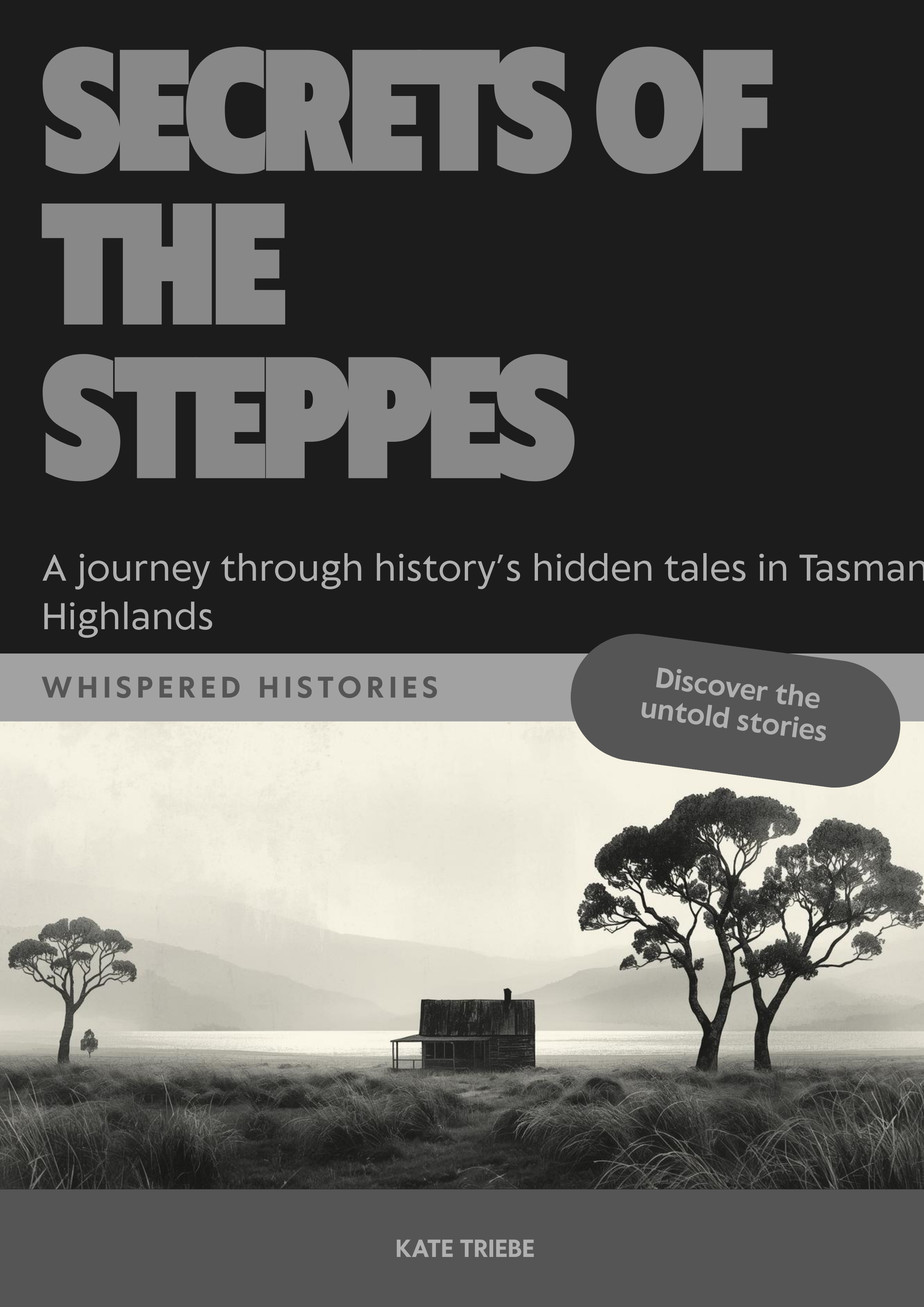
Secrets of the Steppes
A dual-timeline historical novel of letters, legacy, and the quiet power of truth
Set against the vast, wind-scoured plains of Tasmania’s Central Highlands, Secrets of the Steppes is a richly layered novel about women who refuse to let their lives — or their communities — be reduced to tidy numbers.
In the present day, Claire Martin, a young teacher newly arrived on the remote plateau, stumbles upon a bundle of century-old letters hidden beneath the floorboards of an abandoned homestead. Written by Mary Wilson, a schoolmistress in the 1890s, the letters pull Claire into a forgotten world of isolated classrooms, winter routes walked in pairs, and a quiet but fierce resistance against colonial bureaucracy determined to close “impractical” rural schools.
As Claire reads by lamplight, Mary’s voice rises from the past: vivid, observant, and resolute. Through intimate correspondence with her confidante Eliza, Mary records daily life at The Steppes — the barefoot children of shepherds, the struggle for books and slates, the tightening pressure from Hobart officials who value efficiency over human cost. When Mary is forced to leave to save her health, the letters reveal something unexpected: a community — and its children — strong enough to hold the school without her.
The novel unfolds across two entwined timelines. In the present, Claire finds herself confronting the same forces Mary once faced: data without context, tidy narratives that erase lived reality, and the unspoken expectation that devotion must come at the cost of breath. As Claire helps build a living archive of letters, maps, and modern voices, she discovers that legacy is not about standing alone — it is about teaching others how to hold the rope.
Blending authentic historical detail with lyrical prose, Secrets of the Steppes explores how truth survives through ink, how communities resist erasure in quiet ways, and how women across generations learn that rest is not retreat — it is resistance.
Perfect for readers who love atmospheric historical fiction, epistolary storytelling, and novels like The Correspondent, The Guernsey Literary and Potato Peel Pie Society, and The Light Between Oceans, this is a story of wind and endurance, of classrooms lit by winter sun, and of names that refuse to be made small.
A novel about teaching, belonging, and the radical act of telling the full story — even when the world asks you to streamline it
Check Out Our Favourites
Check out our most popular books and photographs
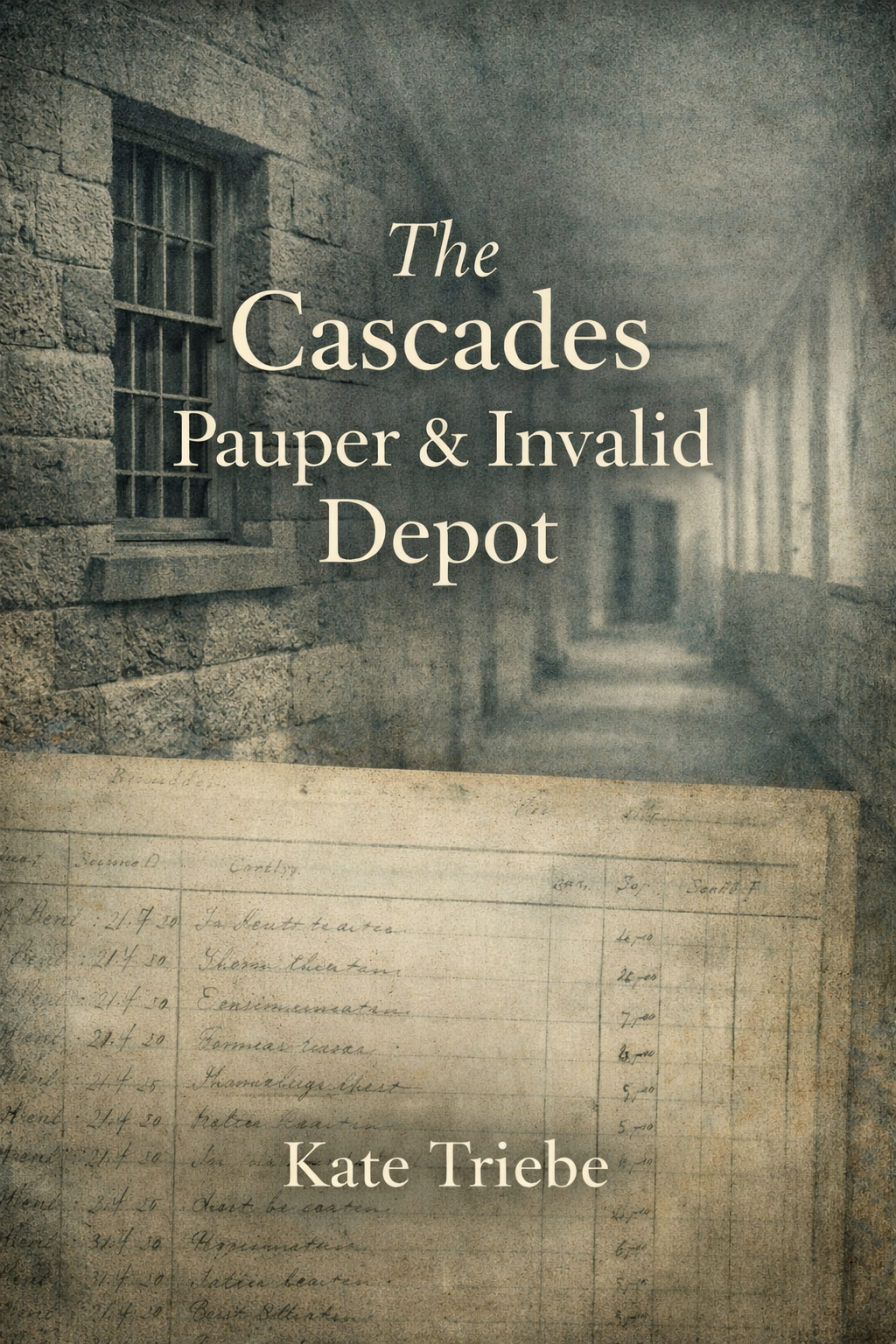
The Cascades Pauper & Invalid Depot is a work of historical fiction grounded in archival record and lived experience. Set in nineteenth century Tasmania, the novel follows Margaret, a clerk within the Cascades Pauper and Invalid Depot, whose role is to observe, record, and categorise the women confined there. The institution presents itself as charitable and corrective, yet its routines quietly erode identity, agency, and memory.
As Margaret documents admissions, transfers, and deaths, she becomes increasingly aware of what the records omit. Women vanish not only through illness and removal, but through administrative silence. Small acts of compliance are rewarded. Deviations are noted, corrected, and erased. The novel traces Margaret’s gradual moral contamination as she learns that to record suffering is not the same as resisting it, and that accuracy itself can become a form of complicity.
Moving from Cascades to Brickfields Asylum, the narrative charts the evolution of institutional control from punishment to medicalisation, revealing how systems adapt while maintaining the same underlying logic. Through restrained prose and carefully realised scenes, the book explores how power operates through routine, classification, and habit rather than spectacle.
Written to stand alongside The Female Factory Tragedy, this novel completes a continuum of Tasmanian institutional history, examining what followed when overt punishment gave way to quieter forms of containment. Together, the books ask what it means to remember ethically, and who bears the cost of preservation.
Steeped in archival detail, The Cascades Pauper & Invalid Depot stands both within and apart from history. Here, silence is temptation. Habit is survival. And deviations from the record echo loudest in their absence.
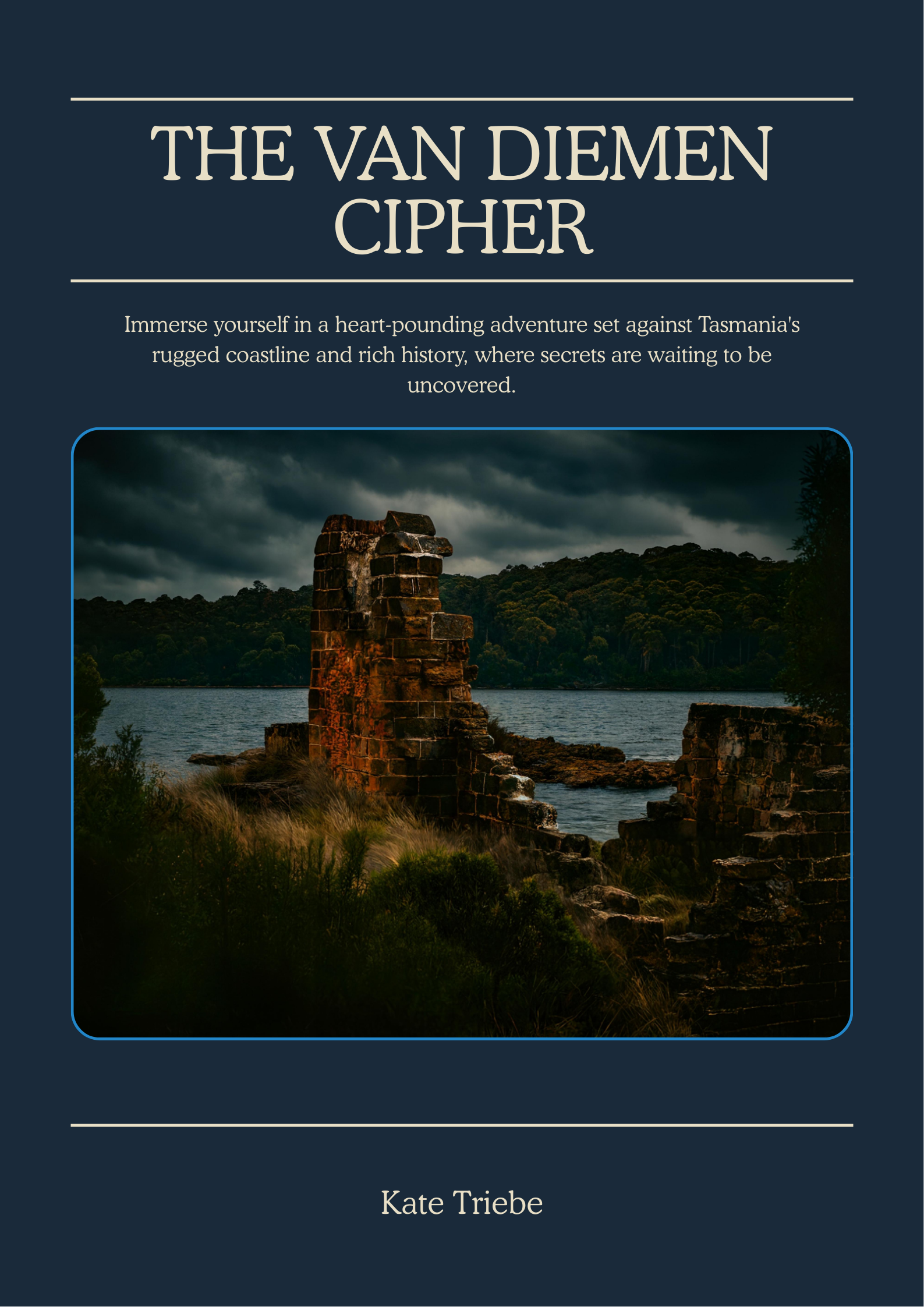
The Van Diemen Cipher
A gripping historical thriller set deep in the convict shadows of Tasmania.
Two hundred years ago, a convict escaped through Hell’s Gates with a blood-soaked crucifix and a secret worth killing for. He left behind a cryptic warning—ignored for generations—until now.
When Hobart historian Dr Elizabeth O’Connor inherits a weathered journal and a fragment of a coded colonial map, she expects dusty trivia. Instead, her discovery triggers a brutal murder, a manhunt, and a desperate race across Tasmania’s wild heart. Hunted by a ruthless collector obsessed with convict relics, Elizabeth joins forces with an ex-Army codebreaker and an investigative journalist to unearth the truth behind one of Australia’s darkest legends.
From the storm-lashed ruins of Sarah Island to the drowning tides of Macquarie Harbour, every step leads deeper into danger—and toward a truth buried beneath centuries of blood and silence.
The Van Diemen Cipher blends historical suspense, real Tasmanian locations, and pulse-pounding mystery in a story where every clue is a trap, every riddle deadly, and the ocean keeps its secrets longer than you can hold your breath.
Perfect for fans of Kate Morton, Dan Brown, and Steve Berry.
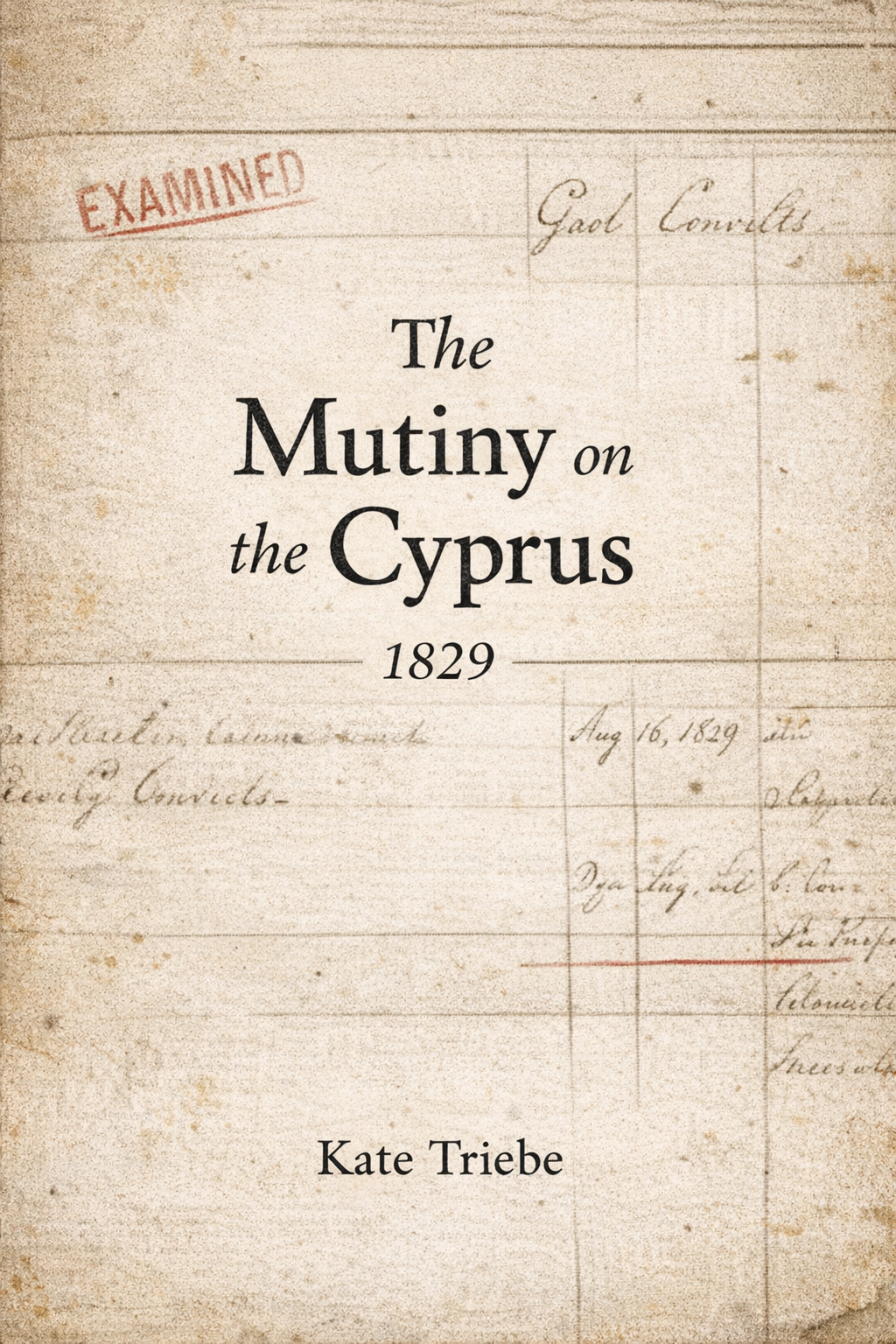
In August 1829, convicts seized the government brig Cyprus while anchored in a remote bay of Van Diemen’s Land and carried the vessel thousands of miles across the Pacific. The mutiny is often recalled as a maritime curiosity. This novel approaches it differently.
The Mutiny on the Cyprus (1829) is a rigorously grounded work of historical fiction that reconstructs the event from within the daily labour of a small brig and the institutional systems that governed nineteenth-century seafaring. Told in the first person by a fictional yet historically plausible participant, the novel traces not only the seizure of the vessel but the long consequences that followed: navigation under coercion, fragile authority at sea, encounters with unfamiliar shores, and the eventual reassertion of Admiralty law.
Rather than romanticising piracy or rebellion, the book focuses on process. It examines how ships function as regulated spaces, how command is asserted and contested aboard working vessels, and how maritime order extends beyond the horizon through legal and bureaucratic systems. Particular attention is paid to seamanship, navigation, provisioning, and the material realities of long Pacific voyages, as well as to the treatment of the Cyprus as an object subject to ownership, seizure, and legal interpretation.
The novel concludes with the return of the surviving mutineers to British jurisdiction and the Admiralty trials that followed, situating the voyage within the wider framework of maritime law and imperial governance. Grounded in archival research and written with deliberate restraint, The Mutiny on the Cyprus (1829) offers a maritime narrative concerned less with adventure than with consequence, record, and erasure.
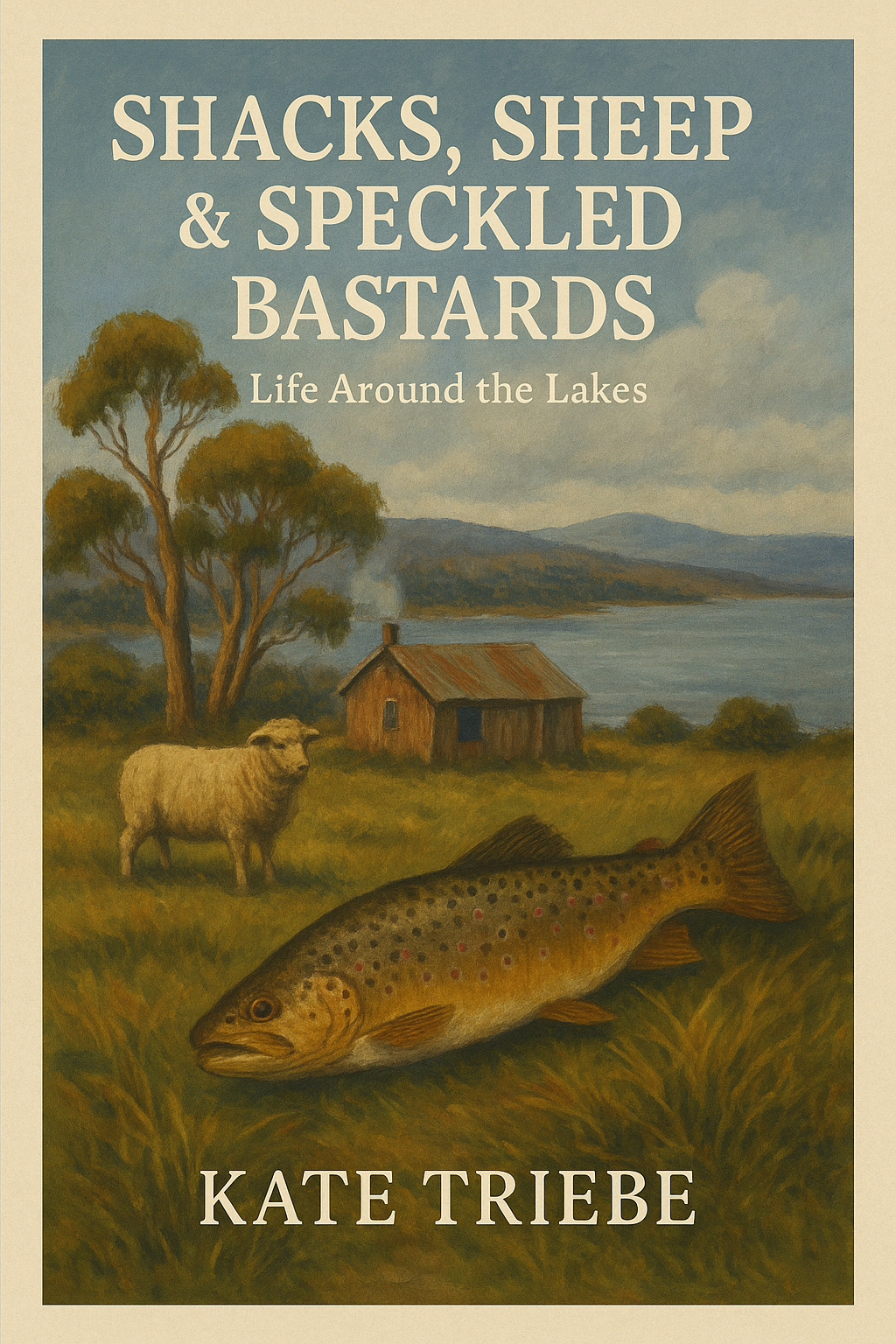
Discover the Central Highlands as You’ve Never Seen Them
Shacks, Sheep & Speckled Bastards is a rich and memorable journey through Tasmania’s lake country. It follows a full year on the plateau, from the first clear days of September to the deep quiet of winter, capturing the weather, the fishing and the people who call this hard but beautiful region home.
Readers are taken from Great Lake to Arthurs, Woods, Little Pine, Penstock, Bronte and Lake Echo, with each chapter anchored in real stories. Some are humorous, some reflective, and all shaped by the rhythm of the Highlands. You will find early mornings where everything feels possible, days when nothing goes right, and the rare moments that stay with you long after you pack the gear away.
The book carries more than fishing tales. It reaches into shack culture, grazing history, fire years, floods, hydro construction and the quiet, practical knowledge shared between generations. You will meet locals who read the sky with more accuracy than a forecast, old hands who never wore waders after November, and the woman who kept a weather diary for three decades. These portraits add depth and give the book its sense of authenticity.
Beautiful hand-drawn illustrations appear throughout, capturing shacks, snow gums, drift boats, birds, insects and the changing light across the lakes. Practical notes and small side stories give readers insight into the details of Highlands life: thawing frozen rod guides, restarting generators in frost, drying gear without causing trouble, choosing food that lasts three days in the cold, and understanding how trout behave as seasons shift.
For anglers, the book is a companion. For locals, it is a familiar voice. For visitors, it offers a clear picture of a place that rewards patience and attention.
Shacks, Sheep & Speckled Bastards is a celebration of real people, real weather and a landscape that shapes everyone who spends time on it. It is a book to read slowly, keep on the table at a shack and return to whenever you miss the lakes. If you know the plateau, you will see something of yourself in these pages. If you do not, this book will show you why so many keep going back.
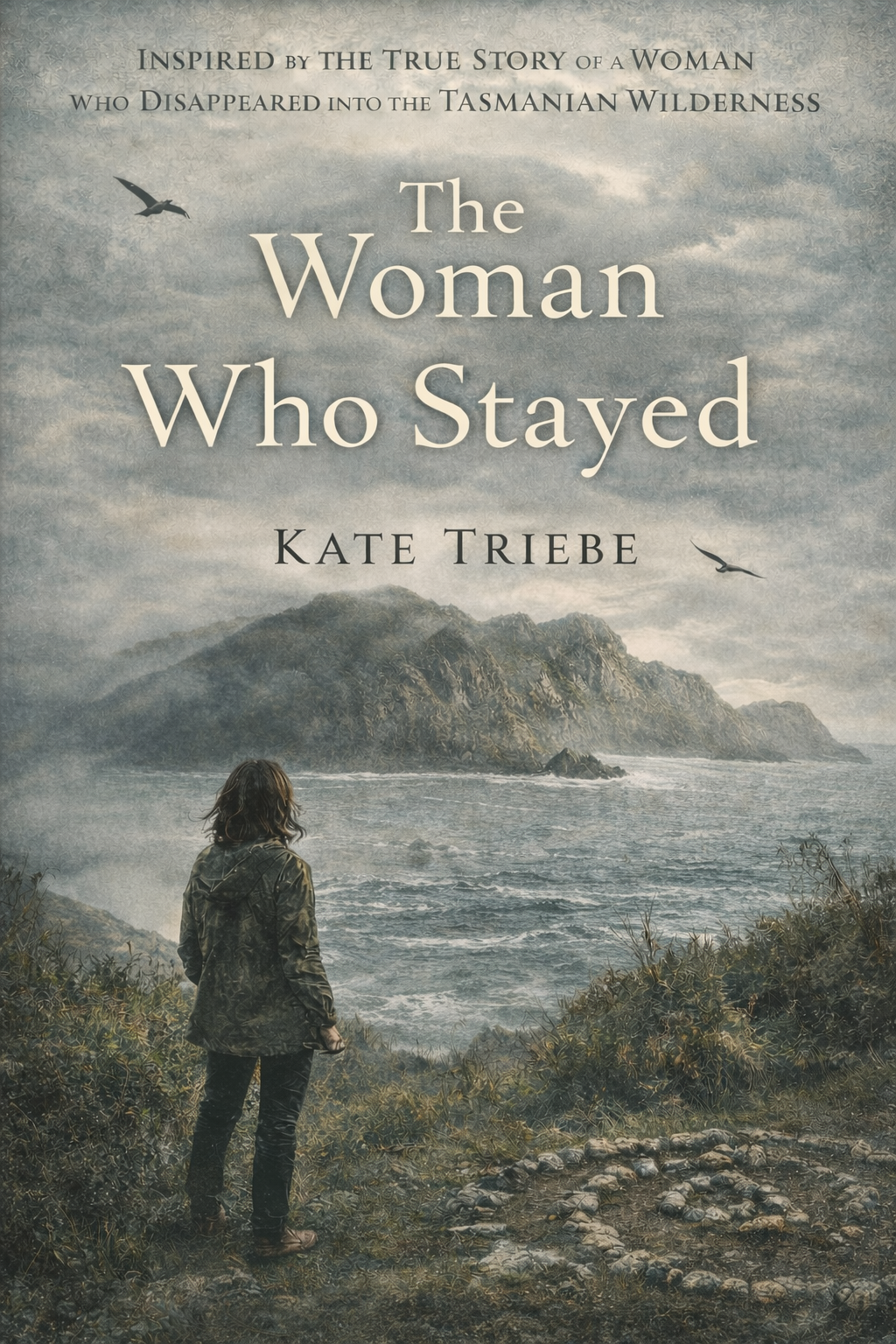
The Woman Who Stayed is a haunting, lyrical novel inspired by the real-life story of Jane Cooper, a young woman who, in the 1970s, vanished into the wilds of southern Tasmania to live alone on remote De Witt Island.
Set against the wind-lashed cliffs and dense bushland of one of Australia’s most isolated regions, the novel traces Jane’s flight from mainland life and her search for meaning in solitude. As the seasons shift and seabirds circle above, Jane builds shelter, befriends penguins and goats, crafts a bell from driftwood, and arranges stones into a spiral that becomes both ritual and reckoning.
But she is not as alone as she believes. Letters arrive. A fisherman drifts into her story. A phantom figure, R.H., emerges from mist and memory. And woven through her journals and field notes are fragments of folklore—both real and imagined—that echo the landscape’s deep-time history.
This is not a tale of survival against nature, but of communion with it. Told with poetic restraint and naturalist detail, The Woman Who Stayed blurs the line between fact and fiction, history and myth, anchoring readers in a liminal space where memory, loss, and land converge.
Perfect for readers of Charlotte Wood, Delia Owens, and Hannah Kent, this is a novel about the cost and clarity of isolation, the echo of untold stories, and the fierce pull of wilderness.
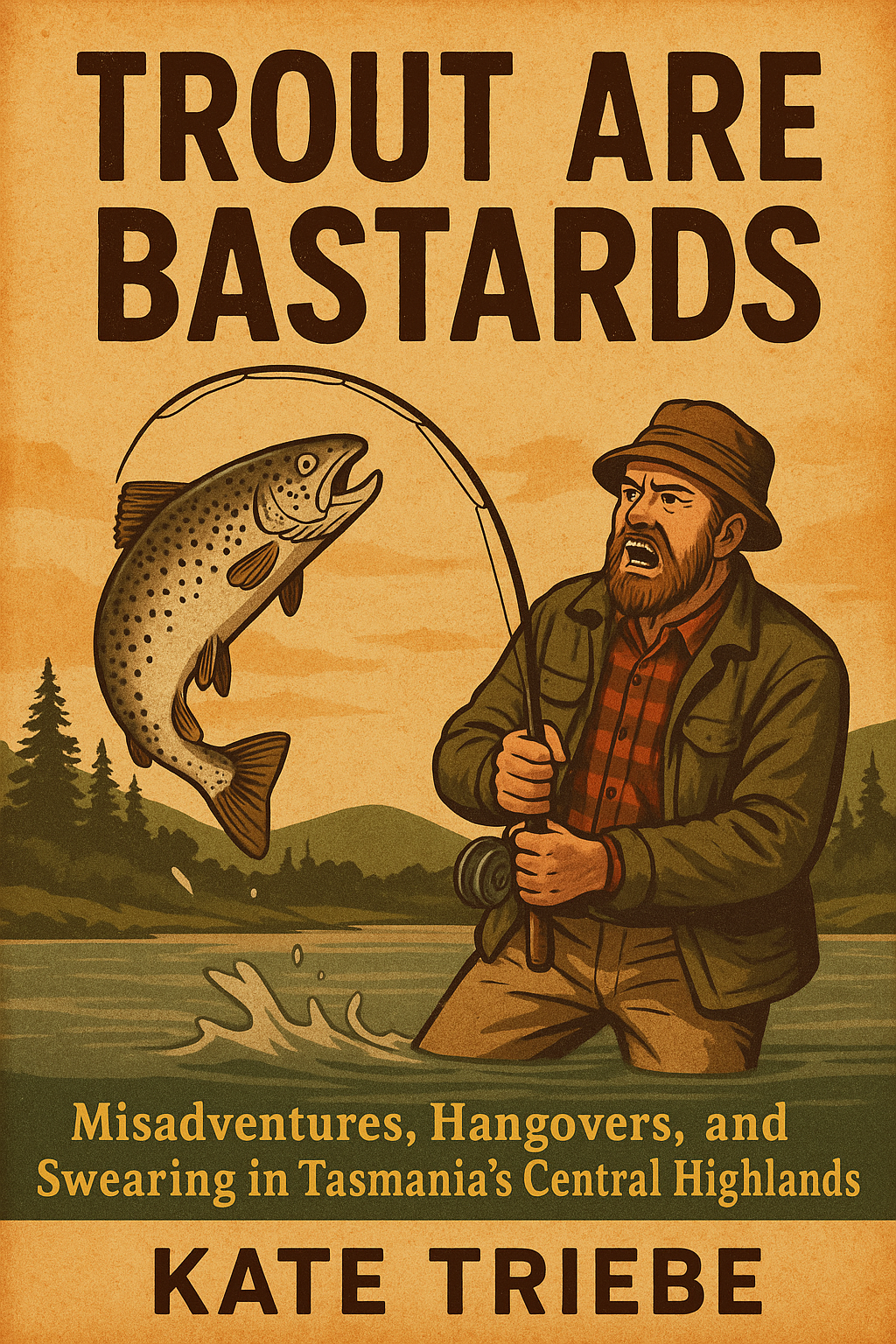
Misadventures, Hangovers, and Swearing in Tasmania’s Central Highlands
by Kate Triebe
If you’ve ever stood knee-deep in freezing water, line tangled around your boots, shouting at a rising trout while your mate laughs and spills his beer — this book is for you.
Trout Are Bastards is an uanapologetically funny, adults-only collection of true-to-life stories from Tasmania’s Central Highlands. It’s not a fishing guide. There are no techniques, no serene reflections, and absolutely no life lessons. What it is, is a brutally honest, laugh-out-loud account of what actually happens on fishing trips once the cameras are off and the beer comes out.
Inside you’ll find:
Trout that rise everywhere except where you cast
Boat ramps that turn grown adults into public spectacles
Shacks filled with smoke, cards, whisky, and terrible decisions
DIY repairs that make things worse
Night visits from Fisheries and police
Burnt sausages, exploding thermoses, and raven-related food theft
And the undeniable truth that trout are smug, clever, and deeply vindictive
Set against the wild beauty of Tasmania’s Central Highlands — Great Lake, Dee Lagoon, Woods Lake, Lake Sorell, and beyond — these stories capture the chaos, mateship, and dark humour that keep anglers coming back, season after season, despite all evidence suggesting they shouldn’t.
⚠️ Important Warning
This book is written for adults only. It contains strong language, alcohol-fuelled misadventures, questionable behaviour, and zero political correctness. If you’re after peaceful fly-fishing philosophy, this is not your book.
But if you want:
Genuine belly laughs
Relatable fishing disasters
Stories that sound exactly like your own worst trips
And a reminder not to take fishing (or yourself) too seriously
Then Trout Are Bastards will feel like sitting around the shack fire with a drink, listening to the stories that only get told after dark.
Because at the end of the day, it’s not about the fish.
It’s about the stories.
And there’s always one more cast.
Let’s Work Together