The Female Factory Tragedy is a work of historical fiction grounded in documented events from colonial Tasmania, set primarily within the walls of the Cascades Female Factory in the 1830s and 1840s.
In Van Diemen’s Land, female convicts were confined to institutions designed to punish, reform, and control. Women laboured in silence. Children were born into stone. Suffering was measured in ledgers and explained away as necessity. When three babies die in the factory nursery, the tragedy is recorded, filed, and quietly absorbed by the system.
This novel traces the lives of several women—convicts, administrators, and witnesses—whose paths intersect inside an institution built to erase individuality. Told through multiple perspectives, The Female Factory Tragedy explores how resistance did not always take the form of riot or escape, but emerged through memory, naming, and the refusal to let truth disappear into paperwork.
Rather than offering a romanticised convict narrative, the book examines the mechanics of power: how bureaucratic language disguises harm, how punishment is normalised through procedure, and how silence itself becomes a tool of control. The story draws closely on archival records, inquests, and government inquiries, reflecting the realities of overcrowding, infant mortality, and moral reform ideology within the female factory system.
Written with restraint and ethical care, The Female Factory Tragedy gives voice to experiences that were rarely recorded in full, honouring the women and children whose lives were reduced to numbers. It is a novel about institutions rather than heroes, about collective endurance rather than individual triumph, and about the quiet defiance that survives even where history intended none.
For readers of serious historical fiction, Australian history, and stories where place and power shape human lives, this book offers a compelling and unsettling examination of a past whose echoes still matter.
The Female Factory Tragedy is a work of historical fiction grounded in documented events from colonial Tasmania, set primarily within the walls of the Cascades Female Factory in the 1830s and 1840s.
In Van Diemen’s Land, female convicts were confined to institutions designed to punish, reform, and control. Women laboured in silence. Children were born into stone. Suffering was measured in ledgers and explained away as necessity. When three babies die in the factory nursery, the tragedy is recorded, filed, and quietly absorbed by the system.
This novel traces the lives of several women—convicts, administrators, and witnesses—whose paths intersect inside an institution built to erase individuality. Told through multiple perspectives, The Female Factory Tragedy explores how resistance did not always take the form of riot or escape, but emerged through memory, naming, and the refusal to let truth disappear into paperwork.
Rather than offering a romanticised convict narrative, the book examines the mechanics of power: how bureaucratic language disguises harm, how punishment is normalised through procedure, and how silence itself becomes a tool of control. The story draws closely on archival records, inquests, and government inquiries, reflecting the realities of overcrowding, infant mortality, and moral reform ideology within the female factory system.
Written with restraint and ethical care, The Female Factory Tragedy gives voice to experiences that were rarely recorded in full, honouring the women and children whose lives were reduced to numbers. It is a novel about institutions rather than heroes, about collective endurance rather than individual triumph, and about the quiet defiance that survives even where history intended none.
For readers of serious historical fiction, Australian history, and stories where place and power shape human lives, this book offers a compelling and unsettling examination of a past whose echoes still matter.


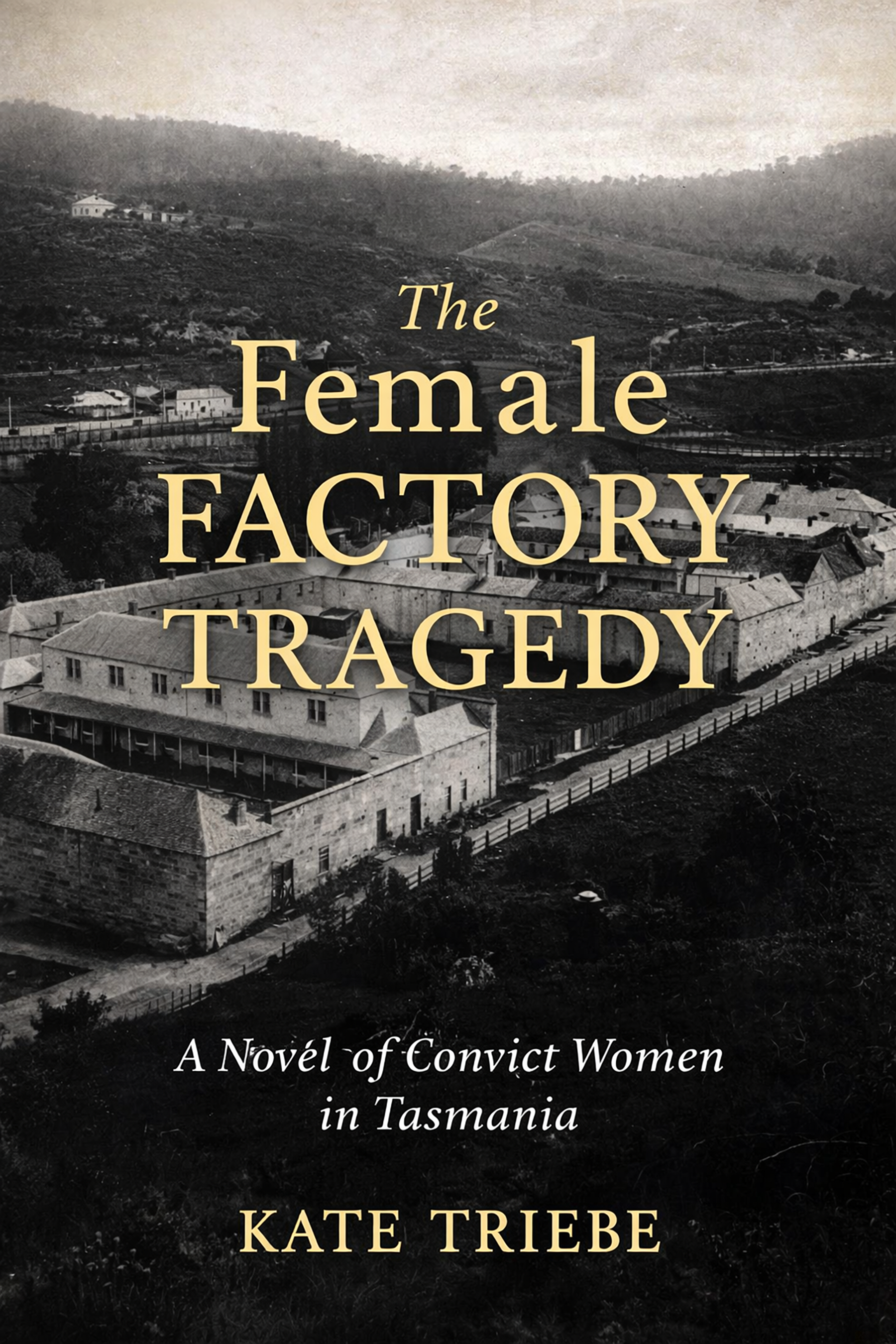 Image 1 of 10
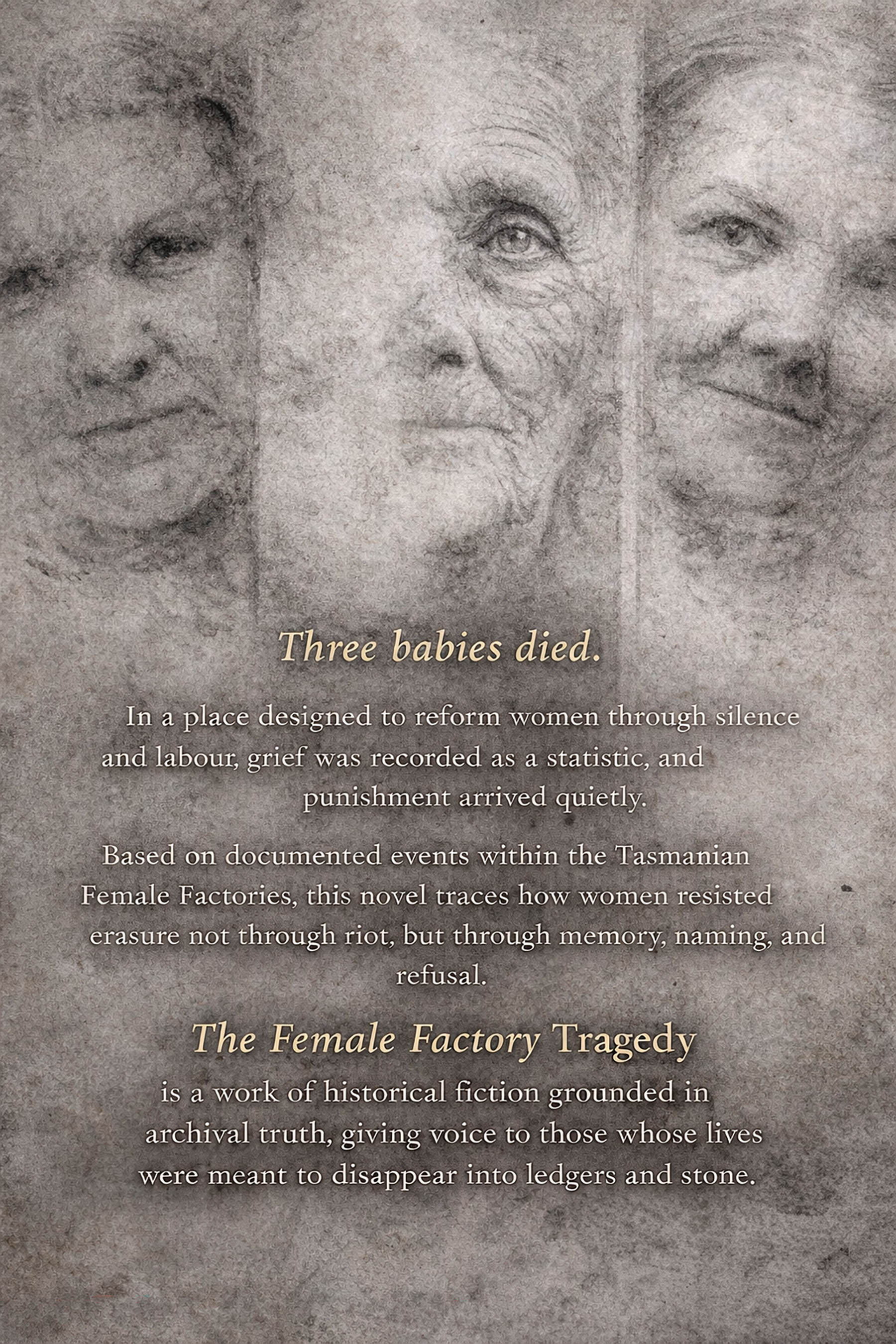 Image 2 of 10
 Image 3 of 10
 Image 4 of 10
 Image 5 of 10
 Image 6 of 10
 Image 7 of 10
 Image 8 of 10
 Image 9 of 10
 Image 10 of 10